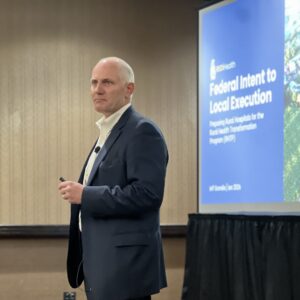

The Rural Health Transformation Program (RHTP) represents a major federal investment intended to strengthen rural healthcare systems, improve access to care, and stabilize the financial future of rural providers.
But RHTP is not simply a funding opportunity.
States receiving funding must submit and execute a Rural Health Transformation Plan that demonstrates how investments will improve rural health outcomes, expand access to care, and strengthen the long-term financial sustainability of rural hospitals and providers.
To meet these expectations, transformation plans must outline initiatives that:
-Improve access to healthcare services for rural residents
-Strengthen the financial stability of rural providers
-Expand workforce capacity and recruitment
-Deploy technology that improves care delivery and chronic disease management
-Support new care models such as value-based payment arrangements
In practice, this means RHTP initiatives must move beyond planning. Programs must be implemented, measured, and reported in ways that demonstrate real progress toward these goals.
Most transformation plans therefore involve multiple initiatives working together — from telehealth expansion and infrastructure upgrades to revenue cycle improvements, workforce development, and new care delivery models.
These initiatives must show measurable progress over time and demonstrate how improvements will continue after federal funding ends.
At its core, RHTP asks organizations to do something both ambitious and practical:
Strengthen rural healthcare systems in ways that expand access, improve outcomes, and sustain rural providers long after the grant period ends.