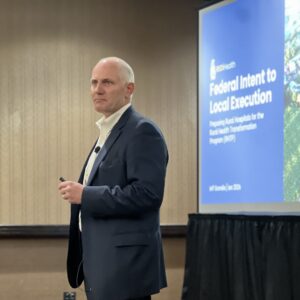

New Mexico has launched one of the largest rural healthcare investments in the country. Through its Rural Health Transformation Plan (RHTP), the state will invest $1 billion over five years, approximately $200 million annually (including $211,484,741 in FY26), to strengthen care delivery in rural, frontier, and tribal communities.
Nearly 700,000 residents live in non-metro areas across the state.
The RHTP is designed to ensure they can access quality care close to home while supporting the long-term sustainability of rural healthcare providers.
The Challenges Driving the Investment
The scope of the RHTP reflects the scale of the challenges facing rural New Mexico.
- 26 of 33 counties are classified as rural.
- Residents often travel 50 to 100+ miles for routine care.
- The state’s maternal mortality rate is 28 per 100,000, which is 22% higher than the national average.
- 30% of rural hospitals are at risk of closure.
Workforce shortages add further strain. Many rural counties lack sufficient primary care physicians, and a significant portion of the active physician workforce is nearing retirement.
These combined pressures have created a system that is clinically stretched and financially vulnerable. The RHTP aims to address both access and sustainability at the same time.
The Five Core Initiatives
The Rural Health Transformation Plan distributes funding across five coordinated initiatives.
Healthy Horizons — $393 Million
This allocation-based initiative focuses on expanding specialty access through telehealth, e-consults, and remote patient monitoring. Program goals include increasing timely specialty consults, reducing chronic disease risk factors, and decreasing 30-day readmissions
Rooted in New Mexico — $243 Million
This initiative is designed to strengthen the rural workforce pipeline. It supports rural residencies, career pathway programs, housing and retention incentives, and long-term workforce development strategies.
Rural Health Innovation Fund — $187 Million
This competitive grant program funds community-driven solutions. Eligible areas include behavioral health services, prevention programs, non-medical drivers of health such as transportation and food access, and targeted facility improvements.
Bridge to Resilience — $122 Million
This service-based initiative focuses on operational and financial stabilization. The stated goal is for 80% of participating facilities to maintain positive operating margins by 2031.
Rural Health Data Hub — $53 Million
This initiative establishes a secure, integrated statewide analytics platform to support planning, data sharing, predictive modeling, and public transparency.
Emphasis on Accountability and Measurable Outcomes
A defining feature of the RHTP is its focus on accountability and public results. Funding is tied to clearly defined goals, and outcomes are expected to be measurable.
Access improvements, workforce expansion, financial stabilization, and community-based interventions are all structured around documented impact. The Rural Health Data Hub plays a central role in supporting this measurement and transparency framework.
REDi Health’s Perspective on Accountability
The New Mexico RHTP is structured as an accountability-driven transformation effort. While the funding levels are substantial, the defining feature of the plan is its emphasis on measurable outcomes and public results. Participation alone will not determine success. Demonstrated progress in access, outcomes, and provider stability will.
REDi Health emphasizes that accountability must translate into practical, low-burden measurement and reporting workflows for rural facilities. Provider-ready dashboards should connect activities directly to outcomes, ensuring that telehealth expansion, workforce investment, and financial stabilization efforts are tied to clearly defined metrics. Transparent, public-facing progress updates require consistent definitions and structured milestones.
REDi also highlights the importance of continuous improvement cycles: establishing a baseline, setting targets, reviewing performance quarterly, and course-correcting as needed. As the New Mexico RHTP moves into implementation, disciplined measurement and operational alignment will be essential to turning funding into sustained impact.
Looking Ahead
Program design and implementation phases are underway, with initiatives launching across FY26 and continuing into FY27.
As funding flows and projects begin, rural providers across New Mexico will have opportunities to participate in initiatives aligned with their operational needs and community priorities.
The Rural Health Transformation Plan represents a significant state-led effort to strengthen rural healthcare infrastructure, improve access to specialty and preventive services, stabilize providers financially, and build a more resilient system for the future.